UX
Content Hierarchy for Business Websites: A Practical Guide to More Leads
Content hierarchy for business websites, explained: how to order your messages, place proof early, and guide users to one clear action - so more visitors become qualified leads.
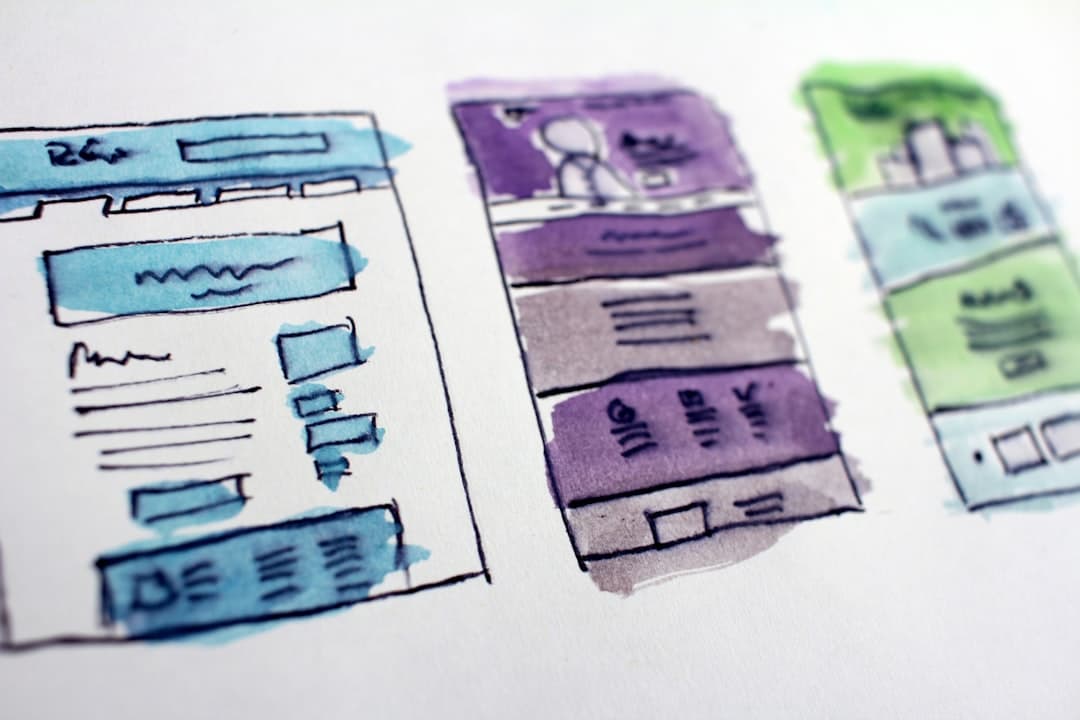
Content hierarchy for business websites is the practice of organizing page elements so visitors instantly see what matters and what to do next. It prioritizes messaging, layout, and navigation to reduce friction and boost conversions. In Gurugram, Nextline Creative applies this to build fast, SEO-ready sites that turn traffic into leads.
Content Hierarchy Starts Above the Fold
A clear content hierarchy above the fold shows who you are, what you offer, and the one action users should take next. Lead with a strong value proposition, concise navigation, and a primary call-to-action. This combination reduces bounce, improves scanability, and sets up the entire page for conversion.
You have seconds to orient new visitors. Structure the top of your page to answer three questions fast: Who is this for? What problem do you solve? What should I do next?
- What you'll learn: Definitions, why content hierarchy matters, how it works, and step-by-step methods.
- Who this is for: Founders, marketing teams, and SMB owners in Gurugram/Delhi NCR aiming for more qualified leads.
- Why trust us: Nextline Creative ships SEO-ready, conversion-led websites using modern frameworks and technical SEO from day one.
Overview
- What is content hierarchy?
- Why it matters to growth and SEO
- How hierarchy works on each page type
- Approaches: wireframes, IA, and content models
- Best practices for B2B, e-commerce, and startups
- Tools, templates, and a quick checklist
Quick Summary
Content hierarchy orders your messages and UI so users find answers in seconds and convert with less friction. Start with an outcome-focused headline, support with proof, guide with scannable blocks, and end each section with a clear action. Measure with engagement and funnel KPIs, then iterate.
- Primary goal: Help users decide quickly and act confidently.
- Core inputs: User intents, business goals, and content types.
- Signals: Headings, spacing, visual weight, and interaction cues.
- Outcomes: Higher engagement, more qualified leads, and cleaner analytics.
What Is Content Hierarchy for Business Websites?
Content hierarchy is the intentional order and visual weight of information on a page so users see the most important message first, then the supporting details, and finally a clear next step. It blends information architecture, copy, and UI to reduce cognitive load and increase conversions.
Think of hierarchy as "what goes where and why." It's not just headings; it's the sequence of answers your visitor needs, supported by layout, typography, spacing, and interaction.
- Information architecture (IA): How your pages and sections connect.
- Page-level hierarchy: The order of sections and the emphasis given to each.
- Component hierarchy: Micro-decisions within cards, hero banners, forms, and CTAs.
At Nextline Creative, we map hierarchy during discovery, then express it via conversion-led wireframes before high-fidelity design. That ensures every section has a job and a measurable outcome. Our UI/UX design service is built around this approach.
Why Content Hierarchy Matters
Effective hierarchy improves first impression, time on task, and conversion rates by clarifying message priority and removing friction. It also supports technical SEO by aligning headings, internal links, and structured content to match searcher intent and crawlability.
Users skim. If they can't find relevance in the opening screen, they leave. When hierarchy is clear, visitors stop hunting and start deciding.
- Faster comprehension: Clear headings and scannable blocks help visitors parse value fast.
- Reduced friction: Fewer dead ends, fewer confusing choices, and better form completion.
- SEO alignment: Logical H1-H3, descriptive links, and clean sectioning improve crawl signals.
- Better analytics: When every block has a role, behavior data tells a sharper story.
Our Gurugram clients often see strong engagement lifts after re-structuring their home and service pages: more hero interactions, deeper scroll, and more qualified form submissions. Clean hierarchy pays off quickly because it meets users where they are.
How Content Hierarchy Works (From Discovery to Launch)
Hierarchy starts with user intents and business goals, then becomes wireframes, content blocks, and UI patterns. Each page assigns a single primary action, supports it with proof, and removes distractions. After launch, measure section performance and iterate based on KPI deltas.
Here's the end-to-end flow we follow at Nextline Creative for business websites and apps.
1) Discover intents and jobs-to-be-done
- Interview stakeholders and sales to surface priority use cases and objections.
- Translate intents into page jobs: awareness, consideration, conversion, or support.
- Draft the "1-3-1" story: one promise, three supports, one action.
2) Wireframe the narrative before visuals
- Sequence sections: Hero, Problem, Solution, Proof, CTA.
- Define content types: headlines, blurbs, stats, logos, testimonials, FAQs.
- Assign prominence: headline weight, section spacing, and CTA priority.
3) Align IA and navigation
- Group pages into clear top-level categories with descriptive labels.
- Support secondary paths (e.g. case studies, resources) with contextual links.
- Test with five-second scans to validate label clarity and pathfinding.
4) Build with performance and SEO in mind
- Use modern frameworks (Next.js, React, TypeScript) for speed and stability.
- Map headings (H1-H3), internal links, and schema to the content plan.
- Keep forms short: move advanced fields to step two or progressive profiling.
5) Measure and iterate
- Instrument each section with analytics events and scroll-depth markers.
- Review form-journey abandonment and field-level friction.
- Prioritize A/B tests on hero copy, proof placement, and CTA pattern.
For hands-on patterns that complement this flow, see our walk-through on homepage lead-capture patterns.
Types, Methods, and Approaches
Most teams combine top-down IA (site map), mid-level page sequencing (wireframes), and component-level emphasis (microcopy and UI). Pick methods that match your risk: simple for small sites, model-driven for complex platforms, and data-informed for sites with traffic history.
Top-down IA (site-level structure)
- Pillars and clusters: Group services into pillars; support with articles, case studies, and FAQs.
- Plain-language labels: Use familiar words over internal jargon.
- Wayfinding links: Add "next step" links at section ends to guide deeper.
Mid-level page sequencing
- Hero first, proof second: Lead with outcome, quickly follow with social proof.
- Jobs, not features: Frame what the user can do, not just what the product has.
- One primary CTA: Keep one clear action; demote secondary links.
Component-level emphasis
- Microcopy: Clarify benefits inside buttons, helpers, and error states.
- Visual weight: Use typography, color, and spacing to signal priority.
- Affordances: Make clickable areas obvious; reduce ambiguity.
If you need a sandbox to experiment, our concept sites showcase pattern ideas you can adapt to your stack.
Best Practices for Business Websites
Lead with outcomes, not features; structure each section around a single decision; and end with a relevant action. Keep copy tight, proof visible, and navigation descriptive. For B2B, map hierarchy to the buying committee; for e-commerce, prioritize product discovery and checkout clarity.
For service and B2B websites
- Define the audience: Name who it's for in the hero and meta description.
- Show proof early: Logos, testimonial lines, and specific outcomes near the top.
- Map objections: Add targeted FAQs that neutralize blockers.
- Route by intent: Provide "Talk to us," "See work," and "Learn more" paths.
For e-commerce
- Search and filters first: Make product discovery instant and forgiving.
- Visual hierarchy on PDPs: Title, price, key benefits, and primary action above the fold.
- Progress indicators: Clear steps through cart and checkout reduce drop-off.
Our e-commerce development service builds these patterns in from the start.
For startup MVPs
- Single promise: One-core-job headline; save the roadmap for later.
- Artifact over idea: Screenshots and demos trump abstract descriptions.
- Feedback loop: Put a friction-light form where motivated users expect it.
Deep dive these principles in our note on service landing pages that convert.
Tools and Resources We Use
Use simple tools that won't slow you down: low-fidelity wireframing for story, design systems for consistency, and modern web stacks for speed. Instrument analytics from day one to observe how each block performs, then iterate based on findings.
- Wireframing & IA: Card sorting, simple flow maps, and quick grayscale wireframes.
- Design system: Tokens for type, color, and spacing so hierarchy is consistent.
- Engineering: Next.js, React, TypeScript, Tailwind CSS, Node.js, PostgreSQL.
- Ops: Vercel/AWS for deployment; feature flags for safe experiments.
- Instrumentation: Scroll depth, click maps, and form analytics by step.
If performance is a gap, consider our website optimization service and browse our SEO-ready websites for inspiration.
How Hierarchy Plays Out by Page Type
Each page type has a different job. Home introduces and routes; services persuade and qualify; case studies prove results; product pages drive action; blog and resources educate. Tailor the section order and emphasis to match the job and the user's intent.
| Page Type | Primary Job | Key Sections (order) | Primary CTA |
|---|---|---|---|
| Home | Orient and route | Hero, Proof, Services/Products, Value Blocks, CTA | Explore offering |
| Service page | Persuade and qualify | Hero, Problem, Solution, Proof, Process, FAQ, CTA | Request proposal / Book a call |
| Case study | Prove outcomes | Context, Challenge, Approach, Results, Takeaways | Discuss your project |
| Product page | Drive purchase | Benefits, Options, Proof, Details, CTA | Add to cart / Buy |
| Blog article | Educate and attract | Definition, Value, Steps, Examples, FAQ | Read related / Contact |
Use this table as a baseline, then adapt for your specific audience and funnel stage.
Case Studies and Examples (Gurugram Context)
When we rework hierarchy, we focus on message order, proof placement, and CTA clarity. The aim is faster comprehension, stronger engagement, and a cleaner handoff to sales. Here are anonymized patterns from Gurugram clients we've supported.
Service business website
- Problem: Traffic was decent, but calls-to-action were buried and copy was feature-heavy.
- Intervention: We wrote a new hero promise, added early proof badges, and placed a simplified process block above the FAQs.
- Approach: We re-sequenced the page around a single decision and removed friction points so the primary action stood out.
B2B corporate website
- Problem: Buyers couldn't map offering tiers to their needs.
- Intervention: We re-sequenced services into pillars with clear labels and added "next step" links in every section.
- Approach: We routed visitors by intent so prospects could navigate relevant pages and reach contact flows with fewer detours.
Startup MVP landing
- Problem: The page described the idea but didn't show the product experience.
- Intervention: We added artifact-led sections (screens, flows) and a short form aligned with the primary promise.
- Approach: We led with the product experience so visitors could understand the core job-to-be-done faster.
For local visibility fundamentals that support hierarchy, review our technical SEO checklist for Gurugram service businesses. If you are weighing platforms, our guide on how we approached an e-commerce rebuild shows the same principles applied at scale.
Implementation Checklist
Use a simple checklist to turn strategy into pages: define audience and promise, outline sections in order, assign one primary CTA, add proof near the top, and instrument analytics. Ship a draft, review behavior, and iterate within a tight feedback loop.
- State the single-page promise in one sentence.
- List 3 supports (proof, benefits, or features) below the promise.
- Place one primary CTA near the hero, repeat it contextually later.
- Sequence: Problem, Solution, Proof, Process, CTA, FAQ.
- Keep forms short: defer non-essential fields to step two.
- Map H1-H3 structure and internal links to related content.
- Tag events: hero CTA, scroll 25/50/75, form start/submit, FAQ toggles.
- Review heatmaps weekly; test copy and proof placement first.
Common Pitfalls and How to Fix Them
Most hierarchy issues come from trying to say everything at once, burying proof, or diluting the primary action. Fix this by choosing a single page goal, promoting proof early, and demoting or removing secondary actions that compete with the main CTA.
- Too many CTAs: Pick one primary; move others to supporting positions.
- Jargon-heavy copy: Rewrite in plain language and speak to outcomes.
- Proof too low: Bring testimonials and logos above the fold or right after the hero.
- Unclear navigation: Rename ambiguous labels and reduce menu depth.
- Uninstrumented pages: Add analytics so you can learn and iterate.
When in doubt, review baseline patterns across our blog to spot examples of focused, intentional hierarchy in action.
Measurement and Iteration
Treat hierarchy as a living system. Track engagement with hero and proof sections, form start-to-submit rates, scroll patterns, and exit paths. Use experiments to test copy, order, and CTA prominence. Keep what moves qualified actions; replace what doesn't.
- Engagement: Section-level clicks, dwell time, and scroll reach.
- Funnel: From hero interaction to contact/checkout completion.
- Quality: Lead source, fit, and downstream pipeline impact.
- SEO: Queries matched to pages and internal link performance.
In our experience, small copy changes (promise-first headlines, tighter proof) often drive bigger shifts than full redesigns. Iterate in days, not months.
Local Considerations for Gurugram
In Gurugram, align hierarchy with mobile-first behavior, regional schedules, and common buying workflows. Keep crucial content concise for on-the-go readers, place contact cues prominently, and support decision-makers who compare options across multiple tabs and devices.
- Optimize the hero and top nav for mobile: many Gurugram users research on phones during commutes and breaks.
- Feature quick-contact options and callback forms; weekday afternoons often see higher inquiry intent.
- Offer clear "See work" and "Talk to us" paths: local buyers compare vendors and want proof plus an easy next step.
Get Expert Eyes on Your Hierarchy
If you're unsure where to tighten your hierarchy, a short expert review can highlight high-impact changes. We assess page goals, message order, proof placement, and CTA patterns, then recommend focused, testable improvements that compound over time.
Want a practical, pattern-led discussion? Read our overview on who we are and how we work, then scan a few concept site patterns to see hierarchy models you can borrow today. When you're ready, get in touch.
Key Takeaways
Clear hierarchy is concise and purposeful. Lead with a promise, support with proof, guide with structure, invite a clear action, and measure what users actually do, not what you hope they'll do, then improve weekly.
- Decide each page's single job before writing a word.
- Put proof early and make the CTA unmistakable.
- Use simple tools; ship drafts and learn fast.
- Instrument everything so iteration is informed.
Conclusion
Content hierarchy for business websites turns attention into action. By ordering messages, emphasizing proof, and guiding with clear CTAs, you help visitors decide faster and convert more often. Treat hierarchy as a living system: measure, learn, and iterate.
Ready to tighten your structure? Explore patterns in our blog library and see performance-focused options across our SEO-ready websites. If you want experienced eyes on your pages, our team in Gurugram is here to help.
FAQs
What is the first step to improve content hierarchy? Write your single-page promise in one sentence and list three supports underneath it. Turn that into a grayscale wireframe with a clear CTA. This gives you a testable narrative before you invest in visuals.
How do I know if my hierarchy is working? Check section engagement, scroll depth, and form completion. If users interact with the hero, reach proof blocks, and submit with minimal back-and-forth, your order and emphasis are likely helping. If they stall, test copy and CTA placement.
Should I design visuals before finalizing hierarchy? No. Establish the story and section order first using low-fidelity wireframes. Once the narrative is solid and concise, layer on visual design to reinforce emphasis and support readability.
What's the best way to place proof on a page? Use a short testimonial or trusted logos directly under the hero or near your primary benefit statement. Keep it concise and tied to the promise. Add deeper case study links for visitors who want more detail.
Related services & guides
Need help implementing this for your business?
We help teams build and optimize websites with strong performance and conversion outcomes.